

Today we explore the different stages of mapping the ecommerce customer journey. Winning over customers in ecommerce involves optimising the customer journey at every stage from opening their browser to unboxing your product.
To do this, you need to picture yourself as a customer going through each step of the process. What are some of the red flags that might cause you to abandon your journey? And what are some of the green flags that would encourage you to proceed? Below we’ll map out the average ecommerce customer journey and take a look at some of the ways to keep customers hooked at every stage.
4 Crucial Stages of Mapping The eCommerce Customer Journey
Stage 1: Discovery
This is the stage where customers discover your store. There are two ways that this can happen: either they’re presented with an advert, or they discover your store after actively searching for it. Adverts are most effective for products that are likely to be impulse purchases. Alternatively, you can use adverts to build brand awareness by showcasing unusual or luxurious products. Make sure adverts are targeted at relevant people in the right places – otherwise your ads are going to be ignored. To get customers clicking, use high contrast visuals, consider highlighting promotions and add social proof by including star ratings or customer reviews.
 What about customers who actively search for your product? Attracting these customers involves primarily investing in search engine optimisation (SEO). You need to make sure that you’re optimising the right keywords on your site’s webpages so that they rank highly on Google and Bing.
You can also invest in paid search ads – this temporarily boosts your webpage listing to the top of the search engine results page and similarly allows you to target certain keywords. Thorough keyword research is essential for matching your customers’ search terms. An SEO agency can help you with this.
Stage 2: Consideration
The customer has discovered your online store. They click on the advert or the search engine listing and they arrive on your site. At this point, they’re likely to assess the quality of your site, browse your products, absorb the product information provided and decide whether or not to add your product to their cart.
To optimise this stage, you first need to make sure that your website loads fast – a slow loading webpage is the first thing that will deter visitors. Optimise images, avoid cluttering pages with ads, and limit redirects.
If a customer stays until the page has loaded, the next thing that might put them off is poor website design. Make sure that text is legible and well-written, that images look professional and that the site is easy to navigate. Working with professional website designers, copywriters and product photographers can help you gain customer trust.
Next, think about the quality of product information provided. Photos should be clear and should present the product from different angles. The product description should contain key info including dimensions, ingredients, technical specs and care instructions. Make sure to also include trust-building information here such as customer reviews, warranty details and return policy info. Of course, the price and the shipping time needs to be reasonable too – advertise discounts or fast shipping at this point to entice customers into buying.
Stage 3: Purchase
You’ve charmed the customer with the quality of your website and the product description has won them over. They add the product to their cart. But they haven’t bought the product yet!
Optimising this next stage is crucial. Between clicking ‘add to cart’ and confirming payment, a lot can still go wrong that can lead to an abandoned shopping cart.

Firstly, avoid overcomplicating the checkout process. While encouraging customers to create an account can allow you to access extra useful information about them, not all customers want to give you this data or have the time to create an account, so create a quick ‘guest checkout’ option. Make sure that customers only need to enter the most essential information into a form and make sure your form supports auto-fill features.
Avoid throwing in surprise costs at this stage – additional shipping fees and packaging fees are a major cause of shipping cart abandonment, so include these fees upfront. You also need to make sure to use a secure payment gateway. Think about what payment methods you accept. Many people use a credit card when shopping online so it’s worth accepting credit cards. BNPL schemes and third party finance options are also recommended for bigger purchases like furniture or appliances.
Stage 4: Delivery
The customer has completed their payment. At this stage, they should receive an automated payment confirmation email as a receipt. The product then gets packaged and shipped. This is where you need to consider the quality of your packaging, warehousing and couriers. In most cases, it’s worth partnering with an ecommerce fulfilment company that can handle all the logistics for you including picking, packing and shipping. Work with a high quality company that has a good track record of being able to deliver on time. Your product’s packaging will meanwhile need to be well designed to avoid damage during transit.
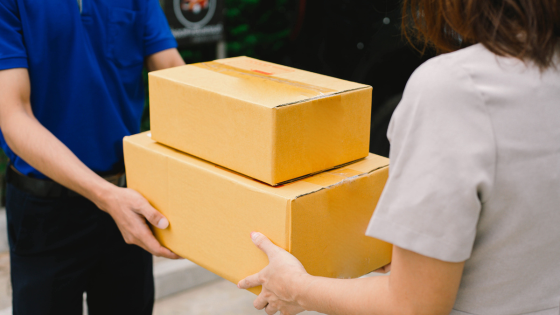
When your customer receives their order, make sure to confirm delivery with a signature or photos. This can help to prevent friendly fraud and provide peace of mind for customers. Once your customer has the product, they will open the packaging. This is your final opportunity to impress the customer – think carefully about how the product is presented within the packaging. With luxury products, adding in premium materials like silk lining could help to create a good first impression.
Bonus Stage: Retention
The journey doesn’t necessarily end when a customer receives your product. In fact, it could be the beginning of a long journey as a loyal customer. Encouraging repeat purchases involves first reaching out to customers after receiving your product to remind them of their purchase. A well-timed friendly request to leave a review could entice customers to think about browsing your site again.
If the customer created an account and opted in to your mailing list, you could potentially encourage them to make another purchase by sending them deals on related products. You can also allow customers to collect loyalty points on purchases, which could be spent on future purchases – an effective way of rewarding customers for loyalty.
Final Thoughts
Now that you know the 4 stages of mapping the eCommerce customer journey, there is nothing standing in your way of keeping your customers happy, and taking your eCommerce business to new heights.